Python Course 2026: Complete Python Course Roadmap 2026 (Beginner → Advanced → Pro)
Python is a versatile, easy to learn programming language that comes with the support for procedural as well as object-oriented programming. Python is getting very popular among software developers, data analysts, data scientists and AI engineers. There is growing demand for Python developers with a great set of skills. After learning the topics given here will help you master Python to Pro level. After completing this you may proceed to learn Data Science field and start learning advanced topics like GenAI.
So, this tutorial is crucial if you want to become successful Python programmer and make your career in Data Analytics, Data Science, GenAI and Agentic AI. Learn all the topics given here one by one and in few months you will master Python programming language.
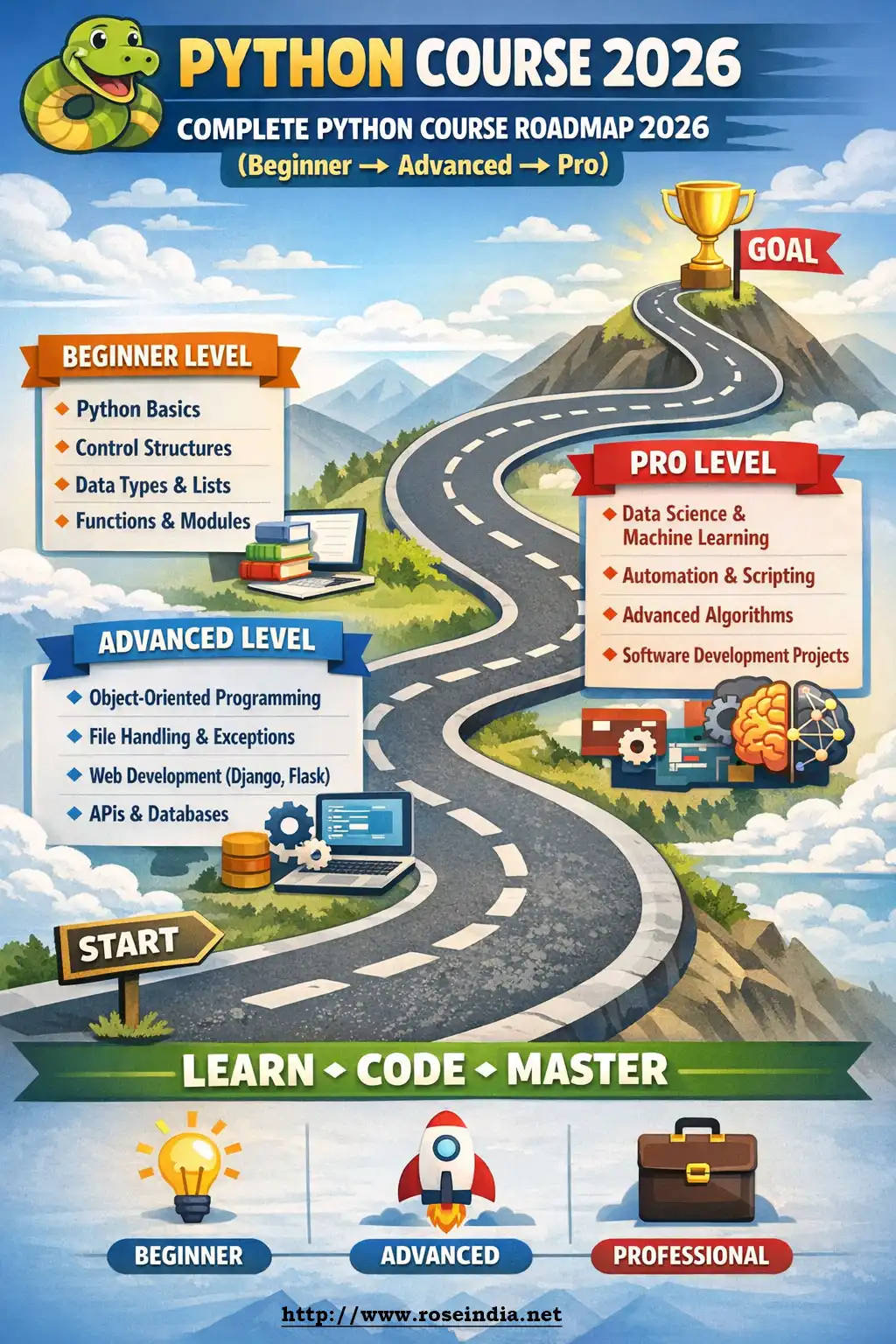
Python is one of the easy to learn programming languages that one should learn in 2026. After acquiring Python and industry oriented skills you will be able to find a job for you in the market. In this section we are providing a complete Python Course Roadmap for 2026 and included all the topics you should learn to master Python. Let’s get started with the topics:
LEVEL 1: Python Fundamentals (Beginner)
Module 1: Introduction to Python
- What is Python?
- Why Python in 2026?
- Installing Python & IDEs (VS Code, PyCharm)
- Running first Python program
- Python syntax & indentation
Module 2: Variables & Data Types
- Variables and naming rules
- Data types:
- int, float, complex
- string
- boolean
- Type casting
- type() function
- Best practices
Module 3: Operators in Python
- Arithmetic operators
- Comparison operators
- Logical operators
- Assignment operators
- Bitwise operators
- Operator precedence
Module 4: Control Flow
- if, else, elif
- Nested conditions
- match-case (Python 3.10+)
- pass, break, continue
Module 5: Loops
- for loop
- while loop
- nested loops
- range()
- Loop control statements
LEVEL 2: Core Python Programming
Module 6: Strings in Python
- String creation & indexing
- Slicing
- String methods
- String formatting (f-strings)
- Common string problems
Module 7: Data Structures
- List (methods, slicing, comprehension)
- Tuple
- Set
- Dictionary
- When to use what?
Module 8: Functions
- Defining functions
- Parameters & arguments
- Return values
- Lambda functions
- Recursion
- Docstrings
Module 9: Modules & Packages
- Importing modules
- Creating custom modules
- __name__ == "__main__"
- pip & virtual environments
Module 10: File Handling
- Read / Write / Append
- Working with text files
- Working with CSV & JSON
- with statement
- Exception handling in files
LEVEL 3: Object-Oriented Programming (OOP)
Module 11: OOP Basics
- Classes & objects
- __init__() method
- Instance vs class variables
- Methods
Module 12: OOP Principles
- Encapsulation
- Inheritance
- Polymorphism
- Abstraction
- Real-world examples
Module 13: Advanced OOP
- Method overriding
- super()
- Magic methods (__str__, __len__)
- Composition vs inheritance
- Dataclasses
LEVEL 4: Advanced Python
Module 14: Exception Handling
- try-except
- multiple exceptions
- custom exceptions
- finally & else
Module 15: Iterators & Generators
- Iterator protocol
- Generator functions
- yield keyword
- Generator expressions
Module 16: Decorators
- Function decorators
- Class decorators
- Real-world use cases
- Logging & authorization examples
Module 17: Regular Expressions
- re module
- Pattern matching
- Searching & replacing
- Validation use cases
Module 18: Date & Time
- datetime module
- timedelta
- timezone handling
- Formatting dates
LEVEL 5: Python for Real-World Development
Module 19: Working with Databases
- SQLite
- MySQL with Python
- CRUD operations
- ORM basics
Module 20: APIs & Web Requests
- HTTP basics
- requests library
- REST APIs
- JSON handling
- API authentication
Module 21: Web Development (Optional Track)
- Flask basics
- Django overview
- MVC architecture
- REST APIs with Django
LEVEL 6: Data, Automation & AI Tracks
Module 22: Data Analysis
- NumPy
- Pandas
- Data cleaning
- Data visualization (Matplotlib, Seaborn)
Module 23: Automation & Scripting
- OS module
- shutil
- Scheduling tasks
- Web scraping (BeautifulSoup, Selenium)
Module 24: Machine Learning (Intro)
- scikit-learn
- ML workflow
- Supervised vs unsupervised learning
- Mini ML project
Module 25: Generative AI with Python
- OpenAI / LLM APIs
- Prompt engineering
- RAG concepts
- LangChain basics
- AI agents
LEVEL 7: Professional & Career Skills
Module 26: Testing & Debugging
- Debugging techniques
- unittest / pytest
- Logging
Module 27: Performance & Best Practices
- Time & space complexity
- Code optimization
- PEP8
- Clean code
Module 28: Deployment & DevOps
- Packaging Python apps
- Docker with Python
- CI/CD basics
- Cloud deployment overview
Final Capstone Projects
- CLI tool
- Web application
- Data analysis project
- AI chatbot / assistant
- Automation system
Course Outcomes
After completing all the topics here in this course, learners can:
- Build real-world Python applications
- Crack Python interviews
- Move into Data Science / AI / Backend roles
- Create production-ready Python projects
Check more tutorials at: